 Grow Beyond
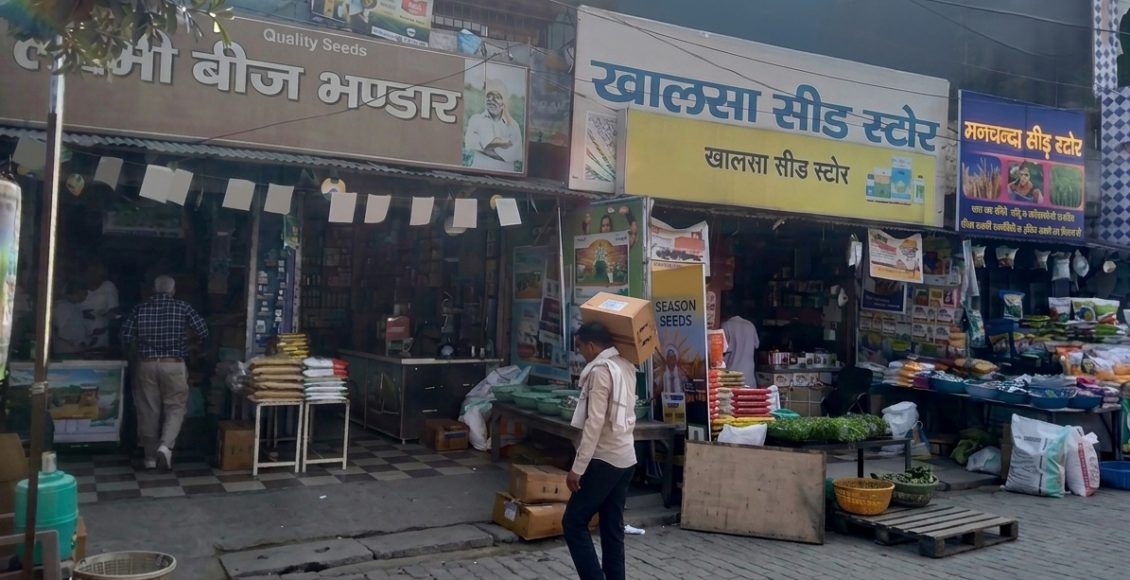
For decades, agriinput companies have pursued a simple distribution mantra: more retailers equal more reach, and more reach equals more revenue growth. Expanding the retailer network has emerged as one of the simplest growth strategies in competitive markets- reassuringly tangible when sales performance pressures rise.
Yet across fertilisers, crop nutrition, and crop protection, evidence increasingly suggests that beyond a certain threshold, adding more retailers does not strengthen the business, it weakens it by diluting control, execution, and destroying brand value.
Growth in Agri input companies ultimately depends on product quality, pricing discipline, quality of farmer recommendations, product availability, and depth of retailer engagement. When retailer expansion happens without regard to these factors, incremental reach often create noise rather than demand.
- Volume Cannibalisation, Not Market Expansion
New retailers frequently draw volumes away from existing channel partner rather than attracting new farmers when retailer onboarding is done without alignment to demand mapping. The company gains footprint on paper, but field sales productivity stagnates or even declines due to demotivation of existing channel partners.
- Weaker Pricing Discipline
With too many retailers selling the same products, discounts become more frequent, brand positioning weakens and price becomes the primary lever, eroding both margins of channel and brand equity.
- Higher Working Capital and Credit Risk
Each new retailer brings additional credit exposure, more inventory in the channel, and greater collections efforts, often resulting in higher receivables, slower cash cycles, and a greater write-off risk, often without proportional revenue upside.
- Diluted Field Execution
Sales and agronomy teams have limited capacity, so increasing the retailer base reduces the time per retailer leading to reduced engagement and weaker product focus. The outcome is a clear paradox- expanded reach but diminished influence.
Despite these drawbacks, retailer expansion continues because it offers visible short-term sales gains, avoids tough decisions around pruning underperforming retailers. Moreover, it is operationally easier for execution managers to add new retailers than to strengthen or disengage from existing ones.
The Fallacy of “Territory Coverage”
Territory coverage is often the most common justification for retailer expansion. However, presence should not be confused with impact. A territory with a smaller number of influential retailers who have strong advisory capabilities and deep trust with farmers can outperform crowded market with many small, low-engagement retailers who lack agronomy expertise and brand commitment. Effective territory coverage starts with data-driven market landscaping exercise of the region and identifying high-potential agri-input consumption clusters (micro-markets).
Within each consumption centre, the emphasis should shift from expansion to structured channel optimisation i.e. “buildbeforeprune” approach. The first step is capacity building and motivation of existing channel partner through targeted product training, demand generation, agronomy enablement, and commercial grooming so that retailers clearly understand which products to push, which farmer segments to target, and how to capture incremental sales. Retailers demonstrating intent and capability should be actively supported to scale through focused engagement and incentives. Only where retailers continue to underperform despite such enablement, channel rationalisation should be undertaken i.e. pruning underperforming retailers while selectively onboarding high-potential, growth-oriented partners using a capability and intent assessment framework. Territory coverage, therefore, is not about adding more retailers, but about activating, enabling, and retaining the right retailers in the right micromarkets to deliver both coverage and control.
Right Balance: Optimal retailer count
The optimal retailer count is company specific and region specific. There is no universal industry benchmark-it only depends on strategic clarity.
Instead of focusing “How many retailers do we have?”, leaders should ask
- How many retailers contribute to 80% of our value creation?
- What is the break-even economics of adding one more retailer?
- Are we expanding across market width or simply increasing complexity?
- Do our incentives reward retailer performance or retailer addition?
These questions reframe distribution from being just a sales metric to becoming a strategic decision.
Way Forward
In agri‑inputs, reach remains critical but unfocused reach significantly increases cost and complexity. Leading players are moving away from indiscriminate network expansion toward data‑driven distribution design, recognising that scale without precision undermines pricing discipline, execution, and working‑capital efficiency.
Winning distribution models are increasingly built using retailer productivity analytics, channel profitability assessment, and market‑coverage modelling to determine the optimal retailer mix and network size for each region. Growth, therefore, is no longer about adding more retailers, but about enabling the right retailers, in the right numbers, to play the right roles that deliver both coverage and control.
Author

Connect with Author at: E-mail agribusiness@sathguru.com


